Dream Eater (2025) : Proof That Small Crews Can Make Big Scares
- Lana Stewart Harrington
- Nov 20, 2025
- 4 min read


There’s a new horror studio in town called The Horror Section, with a logo featuring that green sticker horror fans might remember from browsing through our favorite section back in the video store days.
And you may have heard of the person who started this new company: Eli Roth. Ring any bells? Love him or hate him, the director-turned-businessman is on a mission to create a studio he wishes had existed when he first started in the biz.
The Horror Section was launched earlier this year and was designed to support aspiring filmmakers by providing creative freedom, ownership, and resources to help them achieve their goals.
One of their first releases is a found-footage film called Dream Eater that went viral thanks to “Your Movie Guy”, Chuck Shaughnessy. Found footage is one of my favorite horror sub-genres, so if Chuck recommends it, I’m all in.
Directed by Jay Drakulic, Mallory Drumm, and Alex Lee Williams, with Williams and Drumm starring, this film is notable for being made on a very tight budget with a crew of fewer than ten people. When the original funding fell through, the team quickly came together to figure out how to complete the project. As you can see, everyone took on multiple roles, including the directors, who also acted in the film.
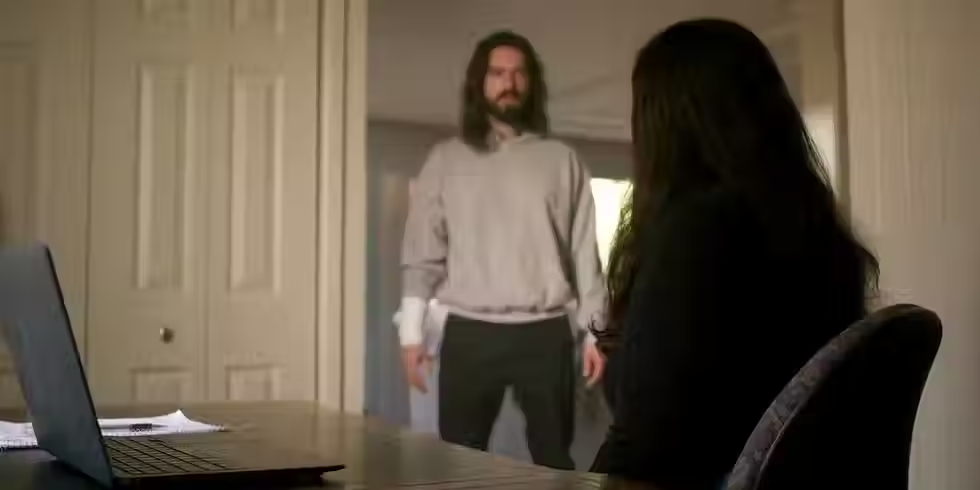
Dream Eater follows Alex (Williams), who suffers from parasomnia, and Mallory (Drumm), a young filmmaker, as they go to a cabin during the snowy winter for the weekend. Mallory plans to help Alex recover from a past sleepwalking incident and to record his nighttime episodes in hopes of finding the cause of his sleep problems.
In a series of nights reminiscent of Paranormal Activity, Mallory begins to suspect that something more sinister could be the cause.
This movie requires a certain suspension of disbelief because who in their right mind would go to an isolated cabin during a significant snowstorm when the sleepwalker has already caused physical harm to himself and others?
Still, I love the setting. Snow can be a character on its own, creating a claustrophobic atmosphere. While it's beautiful to look at, it can also trap you, muffle sounds, and hide footprints, making the environment even more frightening. There's a book called Stolen Tongues I immediately thought of, which is great if you enjoy spooky snowy settings.

Fortunately, the camera work was relatively steady, preventing the common issue of excessive shakiness that can ruin a found footage film. I appreciated the movie's overall look muted in daylight scenes. The subdued daylight tones made the night scenes stand out more, emphasizing their contrast and darkness.
I really connected with and enjoyed the main characters. William’s jokes made me chuckle a few times, including one about The Surreal Life, which makes me think these two must be millennials like me. They are both very likable, and they have good chemistry and banter.
Williams carries much of the film's weight with his captivating portrayal of sleepwalking scenes and interactions with a mysterious entity. His performance is genuinely terrifying and nightmare-inducing, capturing a chilling sense of dread.
During the night scenes, his dark brown eyes almost appear black, intensifying the eerie atmosphere and evoking a visceral reaction—prompting me to close my eyes and cover my mouth so I don’t disturb the neighborhood by screaming too loud out of fright.
The directors skillfully employ the camera to navigate viewers through the house, enhancing tension and surprise. One particularly memorable scene features Mallory lounging on the couch; as she leans back, the camera reveals Alex standing silently nearby, creating a chilling moment that heightens the suspense and spookiness.
I also loved how Alex’s issues were gradually revealed through clues sprinkled throughout the movie, culminating in the explosive final act. You learn about Alex’s background through a few Zoom calls and even an episode of Unsolved Mysteries, which I thought was brilliant. Focusing on some of these millennial-coded pop culture references really resonated with me.

The third act goes bonkers with a touch of wonky CGI, but that is appropriate and adds some charm to a low-budget movie. Same with some of the dialogue and a character named Dr. Snape, which is both ludicrous and funny at the same time.
The ending lost a bit of its footing, with some plot points becoming less convincing, but, in all fairness, it fits the suspension of disbelief you sometimes need, allowing the story to maintain its fantastical or emotional impact despite minor inconsistencies.
I could have done without the whistling throughout the movie. It started to become exhausting and annoying, but I understand they might have wanted to assault the viewer on all their senses. I just found it to be silly and too much like the piano notes from Hell House LLC. It wasn’t necessary.
Overall, I give Dream Eater 3.5 stars out of 5. It's one of the best indie films of the year, with an inspiring underdog story to boot. I was uneasy the rest of the night after the viewing, so that tells me it was a great horror flick. It will be on my top 10 favorite horror movies this year.
And no matter your opinion of Eli Roth, if Roth’s new studio wanted to acquire your low-budget movie, you would jump at the chance, too. Congratulations to the team behind Dream Eater, and I’ll be browsing The Horror Section to see what they do next.
Dream Eater is available to watch on video-on-demand services.


Comments