Forbidden Fruits (2026): A Juicy Concept That Never Quite Ripens


Like many millennials, I remember a time when the mall was the ultimate hangout spot. My parents would drop me off so I could wander the stores with my friends, snack on Auntie Anne’s pretzels, and gossip about who liked whom. It was also the era of Clueless, when feather pens, boas, bubblegum lip gloss, and platform wedges were all the rage.
And if there’s one thing millennials love today, it’s nostalgia. So when I saw the poster for the new comedy-horror movie Forbidden Fruits, I immediately added it to my watchlist. The description sounded like a blend of Clueless and The Craft, including a creative team featuring women I admire. Diablo Cody, known for Jennifer’s Body, is on board as a producer, and Victoria Pedretti—whom I adore from The Haunting of Hill House and The Haunting of Bly Manor—stars as one of the leads.
On paper, it felt tailor-made for me.
In Meredith Alloway’s debut feature film, we’re introduced to a trio of main characters who work at a mall boutique called Free Eden (likely a playful nod to Free People). The group includes Apple (Lili Reinhart), the coven leader and resident queen bee, along with her two associates, Cherry (Victoria Pedretti) and Fig (Alexandra Shipp). Their dynamic evokes the classic Mean Girls archetype: Apple as the icy, magnetic ringleader; Cherry as the sexy, slightly ditzy member; and Fig as the eager-to-please best friend who hides insecurity beneath a stream of hyper-specific trivia.
One day, Pumpkin (Lola Tung), a sweet, slightly awkward employee from the pretzel shop, brings over samples. Cherry insists they don’t associate with the pretzel folks—Free Eden girls clearly see themselves as a cut above the food-court workers—but Fig can’t resist. She secretly indulges in a few bites, and in that brief moment of rebellion, she’s charmed enough by Pumpkin to convince Apple to hire her at Free Eden.
Pumpkin quickly becomes part of the girls’ small coven—or “the fruits,” as they call themselves—where they perform silly, pseudo-spiritual rituals in the store after hours. They light candles, chant, and confess their desires to a mirror they’ve named “Marilyn Monroe,” which is decorated with lipstick kisses and Polaroids.
It all initially feels like harmless mall-girl witchcraft: part sleepover game, part manifestation circle. But the tone shifts when Pumpkin learns about a former member named Pickle, whose boyfriend had mysteriously gone missing. The way the girls talk around Pickle, dodging direct questions, suggests something darker simmering beneath their glossy exteriors.
We follow Pumpkin as she slowly peels back the layers of the group’s secrets. She starts noticing inconsistencies in their stories. Tension quietly builds as Pumpkin’s loyalty to the fruits clashes with her growing unease, until everything finally comes to the surface in an exciting, chaotic third act.
And I hate to say this, but nothing really happens until then.

I was fully engaged during the first half of this movie. I loved the ‘90s-style mall aesthetic and the outfits the girls wore. It genuinely reminded me of my mall rat days as a teenager, drifting from store to store. I sometimes yearn for those days, but malls have lost the charm they once had, if they’re even still around (my mall in Jackson, TN, is barely hanging on).
The comedic tone did strike a chord with me. The script is peppered with witty, ridiculous, and outrageously specific lines that I found very charming. The girls’ banter feels like a heightened version of how teens really talked back then—obsessed with aesthetics, constantly referencing pop culture, and using irreverent humor to mask insecurity. The film has a satirical edge, poking fun at the way capitalism packages witchcraft as another lifestyle brand.
But as the runtime hits the hour mark, I felt the momentum waning. The film starts to feel repetitive: scene after scene of the girls’ after-hours meetups at the mall, more rituals in front of Marilyn Monroe, and vague allusions to something sinister that don't really escalate. The mystery around Pickle and the missing boyfriend stagnates rather than deepens, and the horror elements barely register. I found myself questioning why this was marketed as a horror film when, for most of the runtime, it plays more like a teen comedy with an almost non-existent witchy aesthetic.
That finally changes in the last 20 minutes, which delivers a bloody, entertaining sequence reminiscent of the comedic violence in Evil Dead-style kills. Once the movie commits to its horror, it goes all in: there’s splatter, inventive uses of mall fixtures as weapons, and a gleeful sense of chaos that had been missing until then. One kill involving an escalator is particularly memorable—grisly, over-the-top, and exactly the kind of campy gore I’d been hoping for from the start.

Despite the bland, underdeveloped narrative and inconsistent tone, the performances anchor the film effectively. Reinhart’s Apple is a witchy take on Regina George. She rules Free Eden with a soft, smiling menace, manipulating the people around her. Her performance is impressively restrained; you can see the calculation flicker across her face before she speaks.
Pedretti, in my opinion, always excels, and Cherry is no exception. She’s like a more seductive Karen Smith, except instead of weather forecasts, she toggles between coquette mystic and rodeo Barbie. She gives Cherry vulnerability beneath the sex appeal, making her more than just comic relief.
Shipp’s Fig fills the Gretchen Wieners role, but with a rebellious streak and a head full of useless, oddly specific trivia. She’s constantly trying to prove her value to Apple, and that desperation seeps through her jokes, making her one of the more emotionally interesting characters.
Tung’s Pumpkin is charming and warm, grounding the film with a genuine sweetness that makes it easy to understand why everyone is drawn to her. She has a Cady Heron quality—wide-eyed and eager to belong, slowly realizing the cost of that belonging.
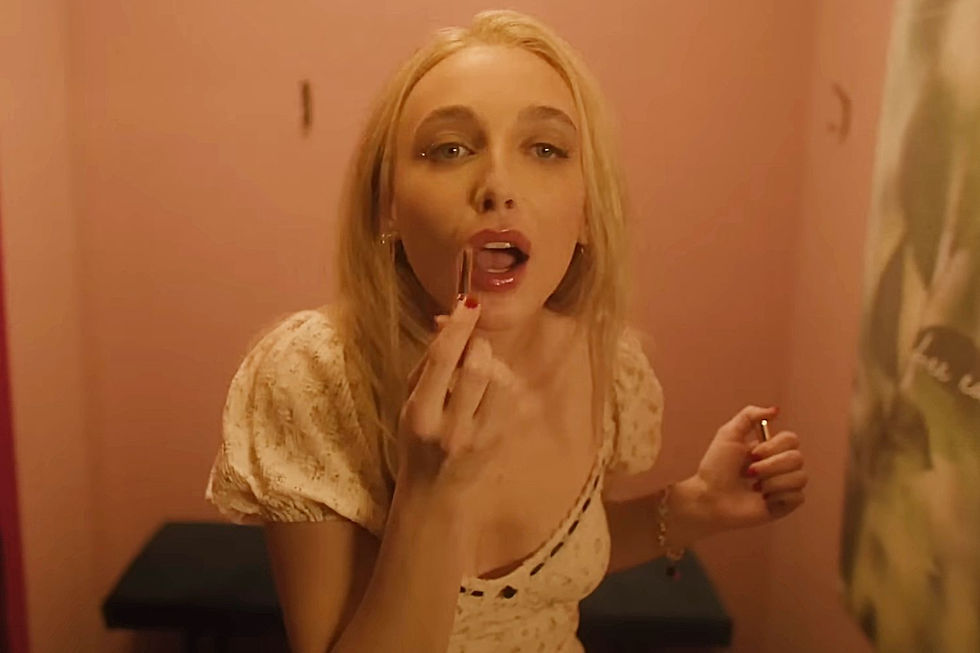
The quartet works incredibly well together. Their dialogue sells the idea that these girls have a history together. Their banter lands more consistently than the plot, and there were moments where I laughed out loud purely because of their comedic timing and chemistry.
Unfortunately, I don’t believe that chemistry is enough to lift this movie from a low rating. The story doesn’t give the characters, or the horror, enough to do. There’s too little momentum in the final stretch leading up to the climax, and then everything that matters is crammed into the last 20 minutes. The conflict resolution is pushed so far into the runtime that it feels abrupt and hurried, as if the movie suddenly remembered it needed to answer its own questions.
Pumpkin’s motivations, in particular, feel undercooked. She briefly mentions in a phone call with her mother why she joined the fruits and what she’s searching for, but the moment is so quick and throwaway that you might miss it. That conversation could have been a crucial emotional anchor, deepening our understanding of Pumpkin’s choices and making the climactic decisions land harder. Instead, it’s treated like a passing detail.
Forbidden Fruits had significant potential. The concept—a coven of stylish mall witches, a missing boyfriend, nostalgia-soaked horror-comedy—seems like a slam dunk. But in the end, the most striking part of the film might genuinely be the film’s posters. The marketing leans hard into a hyper-stylized “cool” factor that the movie itself doesn’t fully deliver on. That exaggerated promise of edginess and camp ultimately set my expectations higher than the film could meet, and that disconnect fueled my disappointment.
Overall, I give Forbidden Fruits two and a half out of five stars. That’s not to say you shouldn’t see this film; if you’re a millennial with a soft spot for malls, ‘90s fashion, and horror-lite vibes, there’s definitely fun to be had—especially in the last act. But I’d recommend waiting for it to hit streaming rather than rushing to see it in theaters. Go in expecting more of a nostalgic, darkly comedic hangout movie with a sudden burst of gore at the end, rather than a full-throttle horror film.
As a millennial with a hankering for ‘90s culture, I think I’ll close my laptop now, order a charm bracelet and jelly sandals, and daydream about malls that still felt like the center of the universe.
You can see Forbidden Fruits only in select theaters starting March 27th, 2026.


Comments